



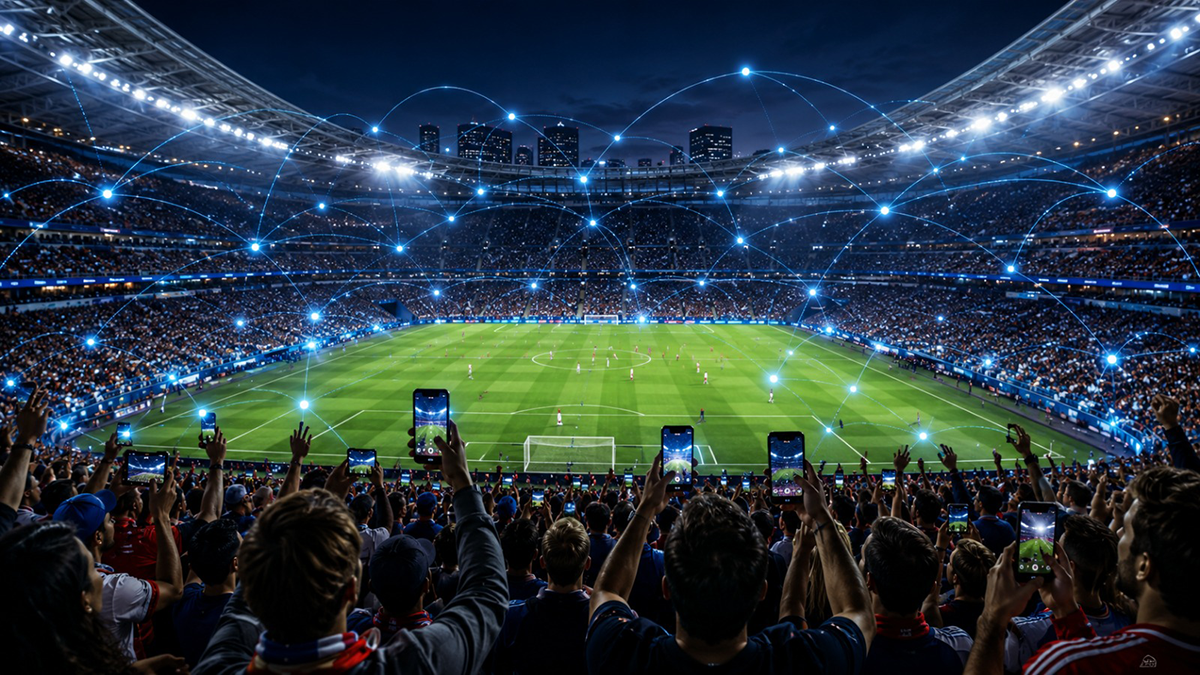
As millions of fans travel across North America for FIFA World Cup 2026™, one expectation will follow them wherever they go: reliable mobile connectivity. Whether arriving at an airport, checking into a hotel, dining at a restaurant, exploring a shopping district, or attending a match, visitors expect their smartphones to work seamlessly.
While much of the conversation around connectivity focuses on stadiums, the fan experience extends far beyond the venue. Delivering uninterrupted mobile service across hotels, airports, retail destinations, restaurants, convention centers, and office buildings requires robust in-building wireless infrastructure, with Cellular DAS (Distributed Antenna Systems) serving as one of the most effective solutions.
What Is In-Building Wireless?
In-building wireless refers to technologies that provide strong and reliable cellular coverage inside facilities where outdoor signals often struggle to penetrate. Modern construction materials, low-E glass, steel structures, and energy-efficient building designs can significantly reduce indoor cellular performance.
A Cellular DAS distributes carrier signals throughout a property, improving coverage, increasing capacity, and ensuring users experience dependable voice and data services throughout the building.
Unlike Wi-Fi, which creates a local internet network, Cellular DAS connects users directly to their mobile carrier, delivering enhanced call quality, faster data speeds, and a more reliable mobile experience.
Connectivity Matters Beyond the Stadium
Stadiums will undoubtedly experience enormous spikes in demand during FIFA World Cup 2026™, with thousands of spectators simultaneously using mobile tickets, sharing videos, posting on social media, and accessing event apps.
However, visitors spend only a small portion of their trip inside the stadium.
Most of their time is spent in:
- Hotels and resorts
- Restaurants and entertainment venues
- Airports and transportation hubs
- Shopping centers
- Convention facilities
- Office buildings and mixed-use developments
Every one of these environments must be prepared to support significantly increased mobile traffic while maintaining exceptional connectivity.
Why Wi-Fi Alone Is Not Enough
Many property owners assume adding more Wi-Fi access points will solve connectivity challenges. While Wi-Fi is an important component of a modern digital ecosystem, it serves a different purpose than cellular infrastructure.
Guests continue to rely on their mobile carriers for phone calls, text messaging, banking applications, authentication codes, navigation, rideshare services, digital wallets, and business communications. During periods of heavy usage, Wi-Fi networks can become congested, and many visitors may never connect to them at all.
By integrating Cellular DAS into an in-building wireless strategy, buildings provide consistent carrier coverage throughout the property, ensuring users remain connected regardless of network conditions.
Hotels and Hospitality Depend on Reliable Cellular Coverage
Hotels welcoming FIFA visitors will host guests from around the world who rely heavily on their mobile devices throughout their stay. From digital room keys and mobile check-in to video conferencing and travel planning, uninterrupted cellular service has become an essential part of the guest experience.
Strong in-building wireless improves guest satisfaction while supporting hotel staff, mobile operations, and connected technologies across the property.
Restaurants, Retail, and Airports Face Similar Challenges
Restaurants and retail locations near host cities will experience increased traffic as fans gather before and after matches. Reliable indoor cellular connectivity supports contactless payments, reservations, mobile ordering, loyalty programs, and customer engagement.
Airports and transportation centers also rely on dependable in-building wireless for digital boarding passes, baggage tracking, flight notifications, navigation apps, and real-time traveler communications.
For these facilities, reliable indoor coverage is no longer a convenience—it is a business necessity.
Investing Today Creates Long-Term Value
The advantages of in-building wireless extend well beyond FIFA World Cup 2026™. As organizations continue adopting AI-powered technologies, IoT devices, cloud platforms, smart building systems, and mobile-first operations, demand for dependable indoor cellular connectivity will continue to grow.
Deploying Cellular DAS today helps future-proof buildings, improve tenant and visitor experiences, and strengthen the digital infrastructure needed for tomorrow's connected environments.
Why ANS?
For more than 30 years, ANS has delivered turnkey in-building wireless and Cellular DAS solutions to commercial real estate, healthcare facilities, airports, stadiums, higher education campuses, hospitality venues, warehouses, and enterprise environments nationwide.
From RF engineering and system design to installation, testing, commissioning, and long-term support, ANS helps organizations create reliable indoor cellular coverage that improves performance, scalability, and the overall user experience.
Ready to strengthen your in-building wireless infrastructure? Contact ANS today to learn how a customized Cellular DAS solution can keep your building, employees, tenants, and visitors connected when it matters most.
